


Editor’s Note
The global energy system has moved from distributed risk into a phase of concentrated disruption.
What emerged in March as operational stress has now evolved into a more structured environment where supply reliability is shaped by geographic exposure, infrastructure vulnerability, and execution resilience.
Oil markets remain supported—but increasingly sensitive to disruptions in a limited number of system-critical regions, particularly across key Middle East corridors.
Stability remains present—but it is no longer evenly distributed.
For decision-makers, the signal is clear:
Reliability is now defined by the ability to operate within disruption, not outside of it.
Executive Summary – A System Under Concentrated Disruption
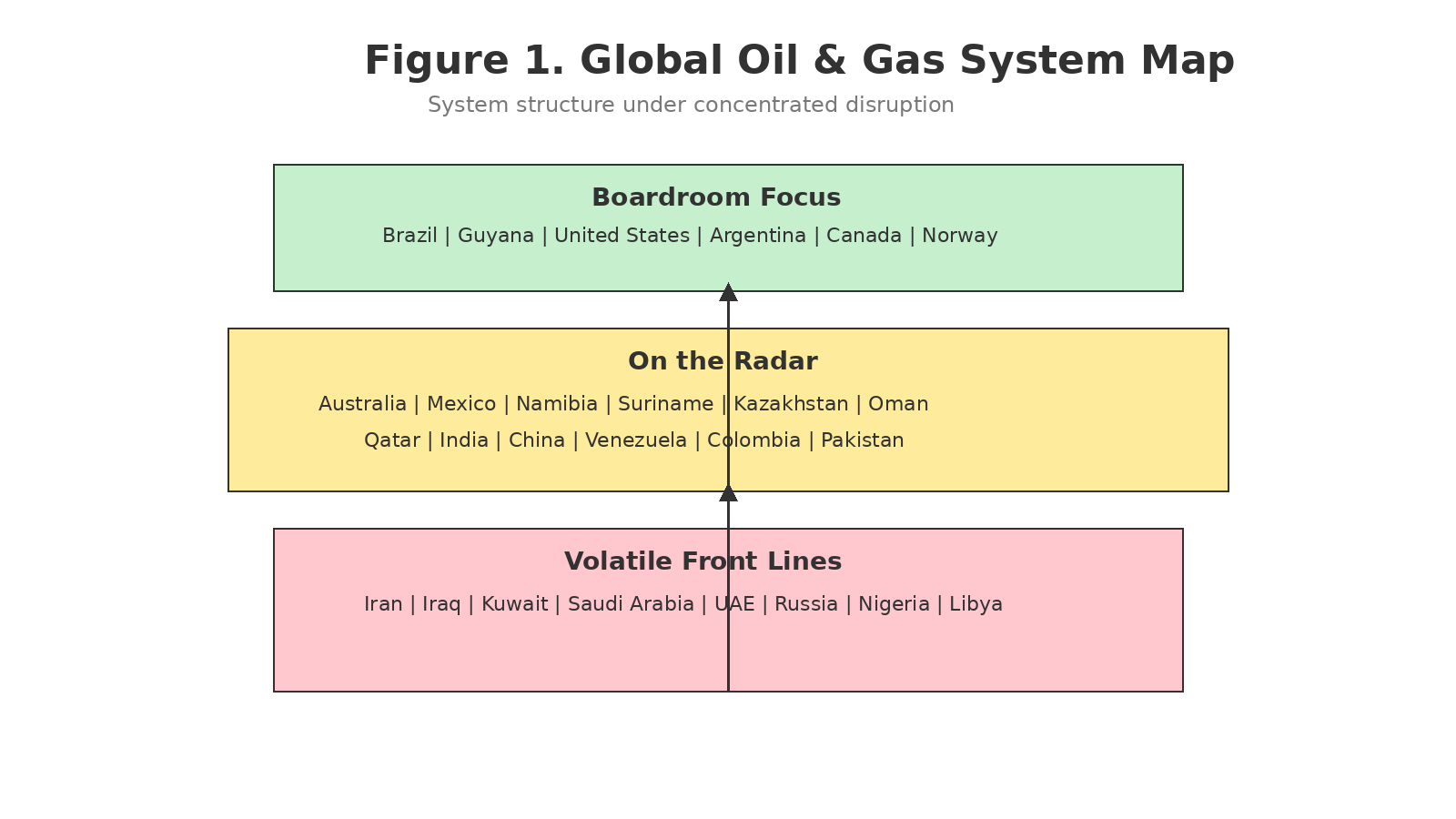
April marks a decisive shift in the global oil and gas system. Disruption is no longer broadly distributed—it is now concentrated within a limited number of high-impact regions.
The system is structured across three distinct tiers:
Resilient Supply Anchors – Execution-proven producers sustaining delivery under pressure
Execution-Driven Opportunity – Markets with upside dependent on infrastructure and policy alignment
Concentrated Disruption – Producers directly influencing supply volatility through instability
Reliability is no longer defined by available capacity alone. It is increasingly determined by:
Geographic exposure
Infrastructure resilience
Execution capability under stress
Executive Outlook – Resilience Under Disruption
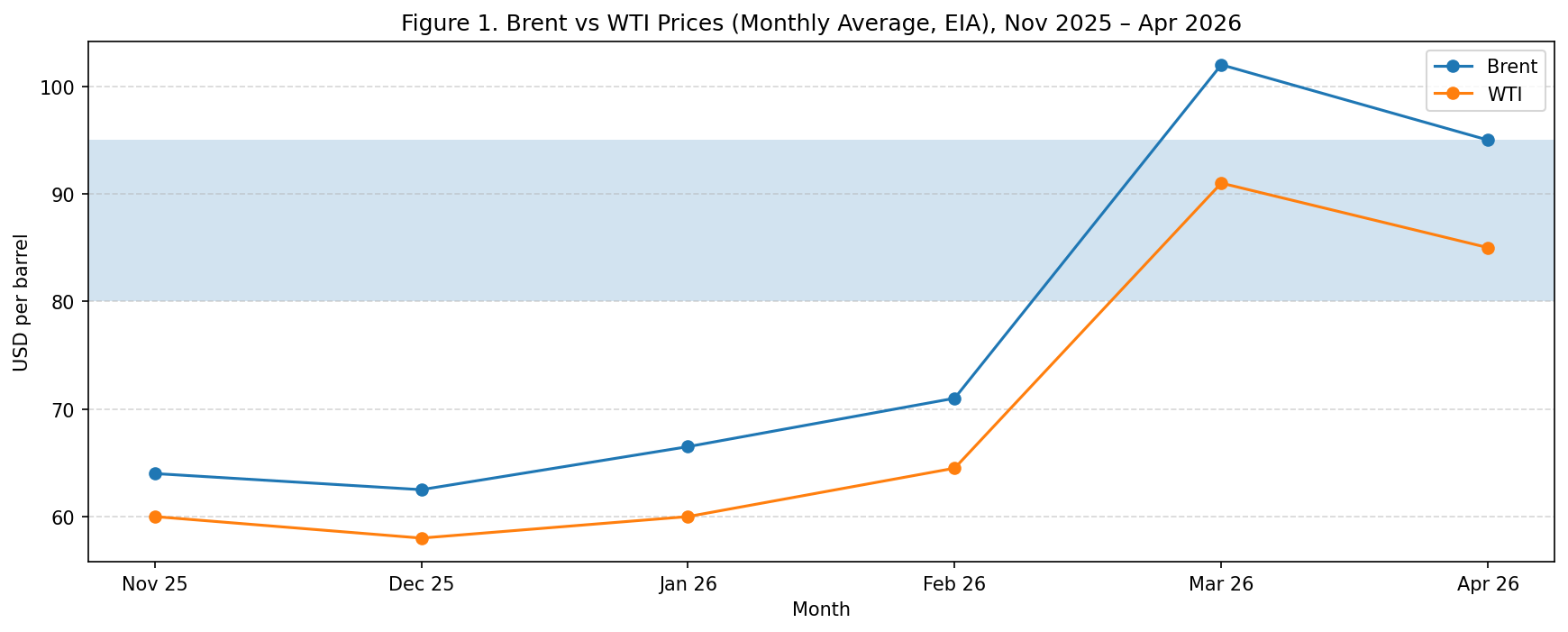
Looking ahead, the system is expected to remain supported within an elevated, volatility-sensitive price environment.
Supply growth continues—but remains selective
Geopolitical exposure is increasingly concentrated
System tolerance for disruption is declining
Oil markets are expected to operate broadly within the $80–$95 range, with disruption-driven spikes toward or above $100 per barrel.
The defining characteristic of this cycle is clear:
Stability is uneven and continuously tested.
Boardroom Focus – Proven Resilience Under Disruption
A refined group of producers now defines the system’s core supply anchors, demonstrating the ability to sustain delivery under active disruption:
Brazil – Offshore execution and pre-salt growth
Guyana – Consistent, operator-led production expansion
United States – Stable, uninterrupted output
Argentina – Vaca Muerta-driven growth and export momentum
Canada – Infrastructure strength and long-cycle stability
Norway – Institutional reliability and uninterrupted offshore production
What distinguishes this group is not scale—but execution continuity under pressure.
Credibility is no longer based on capacity—it is earned through delivery.
On the Radar – Execution-Driven Growth Under Constraint
A second tier of producers continues to offer strategic upside, though increasingly conditioned by execution:
Australia, Mexico, Kazakhstan, Oman
Namibia, Suriname, Colombia, Pakistan
China and India (demand-driven influence)
These markets are not limited by resource potential—but by their ability to convert opportunity into reliable, deliverable supply.
Opportunity exists—but must be validated through execution.
Volatile Front Lines – Disruption as a System Driver
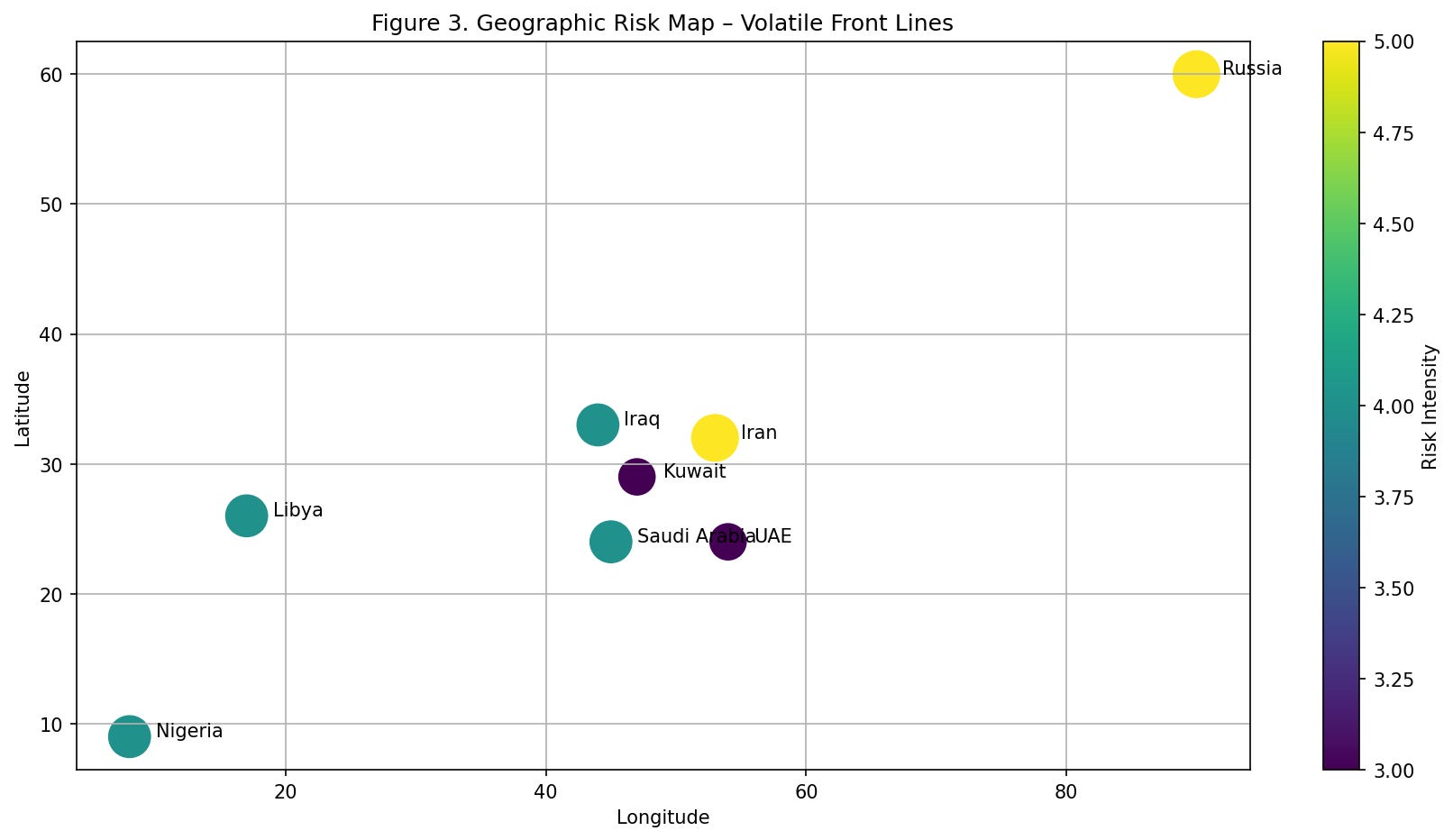
The most significant shift in April is the concentration of disruption within system-critical regions.
Key pressure zones:
Middle East – High exposure across production and transit corridors
Russia – Infrastructure disruption and export complexity
Africa (Nigeria, Libya) – Recovery constrained by structural instability
Even traditionally stable producers are experiencing increased exposure to:
Security incidents
Infrastructure vulnerabilities
Export disruptions
Volatility is no longer episodic—it is embedded and system-defining.
Operator Landscape – Execution Concentration
Global supply continues to be driven by a concentrated group of operators:
Supermajors
ExxonMobil, Shell, TotalEnergies, Chevron, Equinor
National Champions
Petrobras, Saudi Aramco, ADNOC, QatarEnergy
Execution is increasingly defined by:
Offshore and LNG-linked developments
Capital discipline and long-cycle investment
Geographic diversification
Supply is no longer defined by geography—it is defined by execution capability.
Industry Pulse – International Execution Under Disruption
The oilfield services sector remains aligned with international and offshore growth.
Key players:
SLB – Integrated and technology-driven execution
Halliburton – Expanding international footprint
Baker Hughes – LNG and gas infrastructure leadership
Weatherford – Production optimization and recovery
Key dynamics:
International markets drive activity
North America remains disciplined
Projects are increasingly complex and capital-intensive
Growth persists—but is defined by execution, efficiency, and adaptability.
Global Signals – Concentration of Risk and System Impact
The system is now shaped by a tight set of interconnected risk factors:
Middle East corridors → High-impact disruption sensitivity
Russia flows → Structural pressure on exports and refining
Atlantic Basin growth → Partial but gradual rebalancing
LNG expansion → Supports diversification, but remains exposed
Oil markets reflect this structure:
Supported in the mid-$80s to low-$90s per barrel
Increasingly driven by real-time geopolitical events
The system is no longer broadly fragile—it is selectively sensitive.
Closing Signals – From Capacity to Reliability
April confirms a fundamental shift in how the global energy system operates.
This is not a system constrained by resource availability—but by reliability under pressure.
Capacity remains present
Investment continues
But deliverability is no longer guaranteed
A smaller group of execution-proven producers now defines stability, while disruption remains concentrated and highly impactful.
For operators, service companies, and decision-makers:
Scale is no longer sufficient
Execution consistency is critical
Diversification is essential
In a disruption-shaped system, reliability—not capacity—defines strength.
Closing Notes
First Watch Energy – Independent Oil & Gas Intelligence
Santiago Estefania
santiago@firstwatch.energy
www.firstwatch.energy
About First Watch
First Watch Energy – Independent Oil & Gas Intelligence
Delivering strategic insight into global upstream activity, market dynamics, and execution trends shaping the energy system.